Baby Food Guide: Safe, Nutritious Foods for Healthy Growth
Give your little one the best start with our complete baby food guide. Discover age-wise meal ideas, nutritious foods, feeding tips, food safety advice, and healthy recipes to support your baby's growth and development.
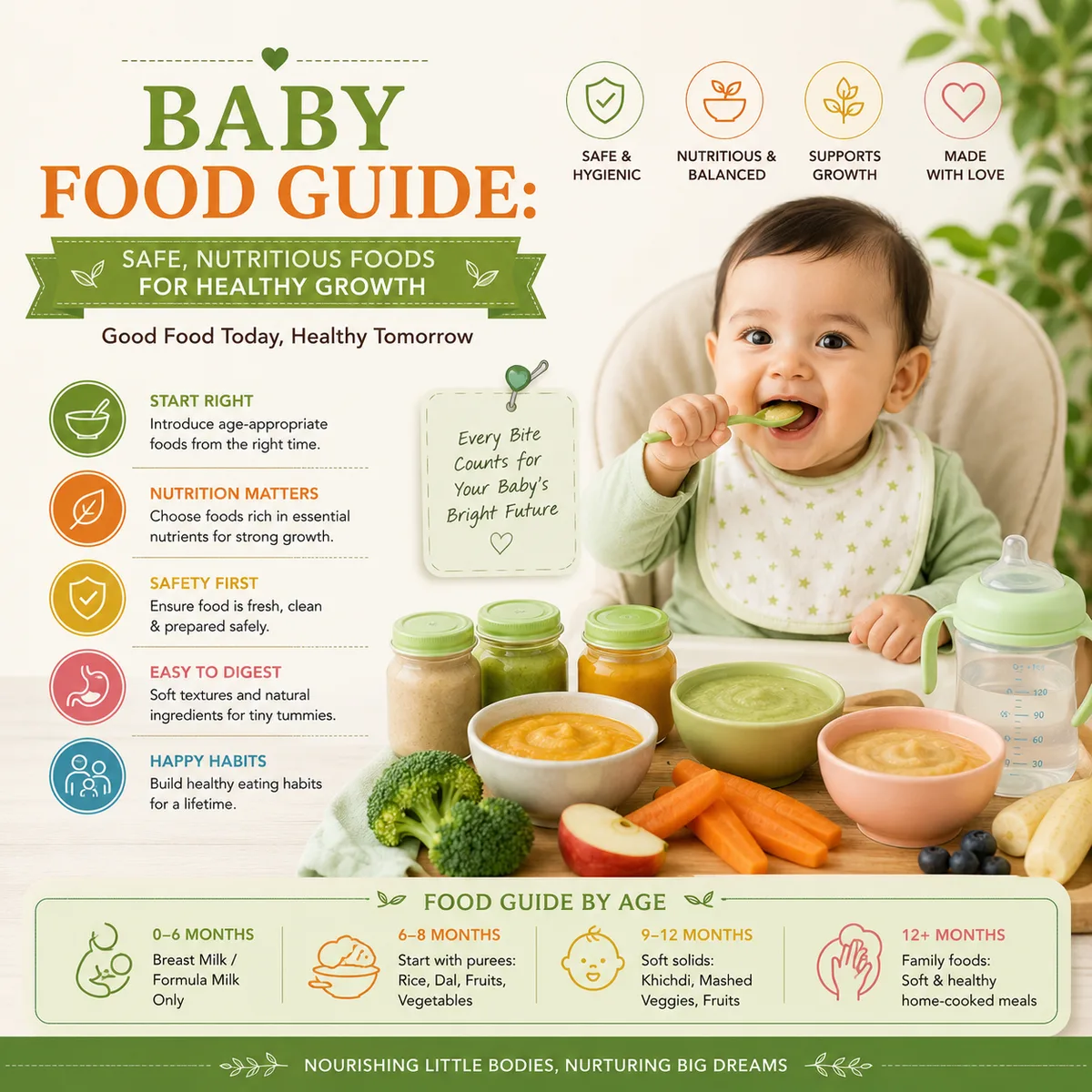
Baby Food Guide: Nutritious Foods, Feeding Tips & Healthy Meal Ideas
Introduction
Providing the right nutrition during your baby's early years is essential for healthy growth, brain development, and building strong immunity. As babies transition from milk to solid foods, parents often have questions about what to feed, when to introduce new foods, and how to ensure a balanced diet.
This guide covers nutritious baby foods, feeding tips, age-wise meal ideas, food safety practices, and storage tips to help you make informed feeding choices.
Why Proper Nutrition Is Important for Babies
A balanced diet provides the nutrients babies need for physical growth, cognitive development, and healthy digestion.
Benefits of Healthy Baby Food
- Supports healthy growth and development
- Strengthens the immune system
- Promotes healthy digestion
- Helps develop good eating habits
- Provides essential vitamins and minerals
Best Foods for Babies
1. Fruits
Soft, ripe fruits are easy to digest and naturally rich in vitamins.
Popular Choices
- Banana
- Apple (steamed or pureed)
- Pear
- Mango
- Papaya
- Avocado
2. Vegetables
Cooked vegetables provide fiber and important nutrients.
Recommended Vegetables
- Carrot
- Sweet potato
- Pumpkin
- Peas
- Spinach
- Bottle gourd
3. Cereals & Grains
Whole grains provide energy and support healthy growth.
Common Options
- Rice cereal
- Oats
- Ragi (Finger Millet)
- Wheat porridge
- Suji (Semolina)
4. Protein-Rich Foods
Protein helps build muscles and supports overall development.
Examples
- Moong dal
- Lentils
- Paneer
- Yogurt
- Well-cooked eggs (as recommended by your pediatrician)
5. Dairy Products
After the appropriate age and based on your pediatrician's advice, dairy foods like yogurt and paneer can provide calcium and protein.
Age-Wise Feeding Guide
6–8 Months
- Soft fruit purees
- Vegetable purees
- Rice cereal
- Mashed banana
- Ragi porridge
8–10 Months
- Soft khichdi
- Dal with rice
- Mashed vegetables
- Oatmeal
- Soft fruits
10–12 Months
- Small pieces of soft fruits
- Vegetable upma
- Idli
- Dalia
- Soft chapati with dal
12 Months and Above
Babies can gradually enjoy a wider variety of family foods that are soft, balanced, and easy to chew.
Healthy Feeding Tips
- Introduce one new food at a time.
- Watch for any allergic reactions.
- Offer freshly prepared meals whenever possible.
- Encourage self-feeding as your baby grows.
- Avoid forcing your baby to eat.
- Maintain regular meal and snack times.
Foods to Avoid for Babies
For safety, avoid giving:
- Whole nuts (choking hazard)
- Excess salt
- Added sugar
- Honey for babies under 12 months
- Highly processed or junk foods
- Unpasteurized dairy products
Always consult your pediatrician if you have concerns about introducing specific foods.
Food Safety Tips
- Wash fruits and vegetables thoroughly.
- Cook food completely.
- Use clean utensils and feeding bowls.
- Store prepared food safely.
- Discard leftovers that have been left out for too long.
- Always check food temperature before serving.
Storage Tips
To keep baby food fresh:
- Refrigerate homemade purees in airtight containers.
- Freeze portions if needed.
- Label containers with the preparation date.
- Avoid repeated reheating.
- Use fresh ingredients for every meal whenever possible.
Signs Your Baby Is Ready for Solid Foods
Many babies are ready for solids around 6 months, but readiness varies.
Common signs include:
- Good head control
- Sitting with support
- Showing interest in food
- Opening the mouth when food is offered
- Ability to swallow food rather than push it out with the tongue
Consult your pediatrician before starting solid foods.
Conclusion
A nutritious, balanced diet during infancy lays the foundation for lifelong healthy eating habits. Offering a variety of fresh fruits, vegetables, grains, and protein-rich foods while following proper hygiene and feeding practices can help support your baby's healthy growth and development. Every baby develops differently, so always introduce new foods gradually and seek professional medical advice when needed.
Frequently Asked Questions (FAQ)
When should babies start solid foods?
Most babies are ready for solid foods around 6 months, but consult your pediatrician before starting.
Which fruit is good for babies?
Banana, apple (steamed or pureed), pear, papaya, avocado, and mango are popular options.
Can babies eat rice?
Yes, soft rice or rice cereal is commonly introduced as one of the first solid foods.
How should homemade baby food be stored?
Store it in clean, airtight containers in the refrigerator or freezer and use it within the recommended time.
Should I add sugar or salt to baby food?
It is generally recommended to avoid added sugar and excess salt in baby food.