Food Storage Tips: Keep Your Groceries Fresh, Safe & Organized
Learn practical food storage tips to keep grains, spices, fruits, vegetables, oils, and pantry essentials fresh for longer. Discover smart storage methods that reduce food waste, preserve flavor, and help maintain an organized kitchen.
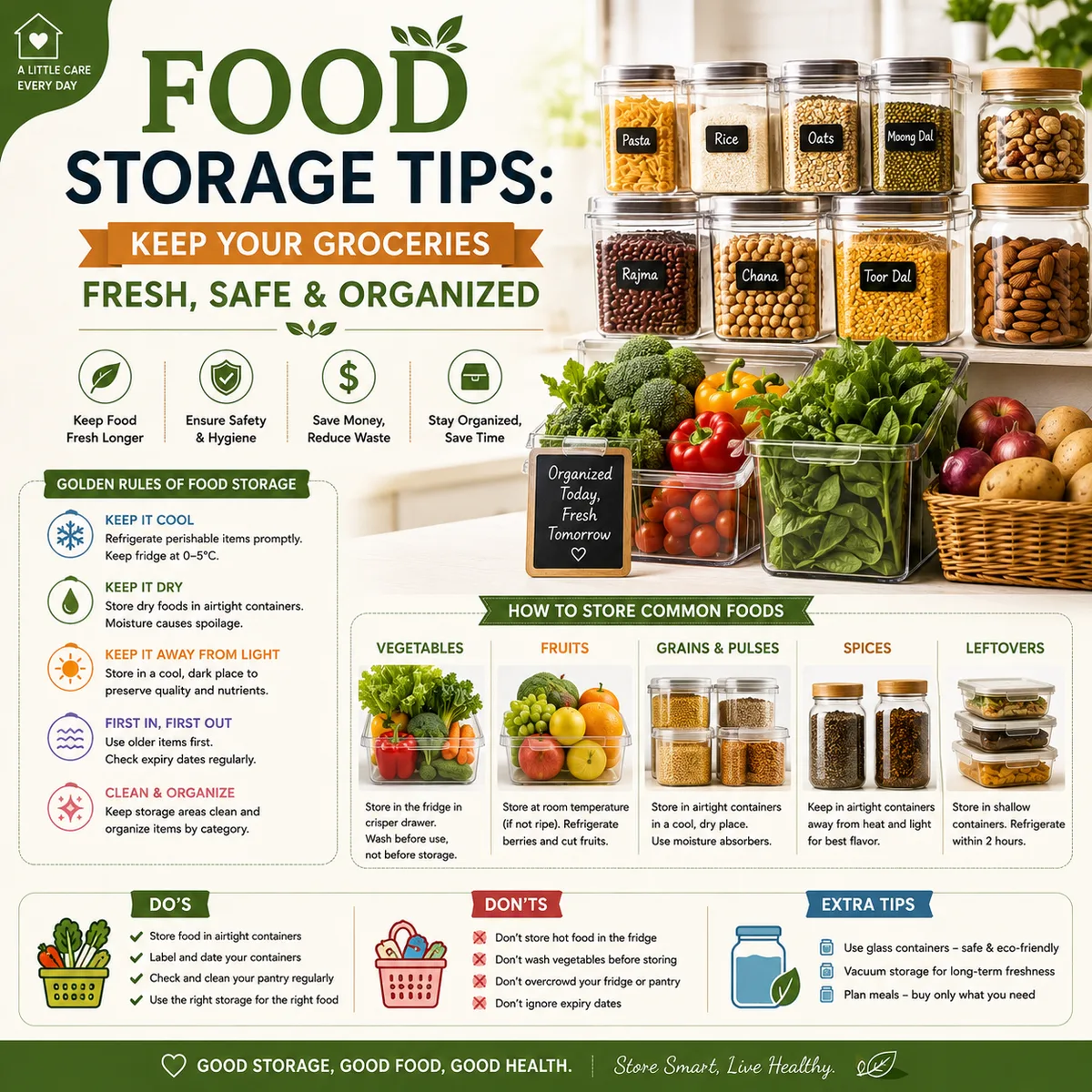
Food Storage Tips: A Complete Guide to Keeping Food Fresh for Longer
Introduction
Proper food storage is essential for maintaining freshness, preserving nutrients, and reducing food waste. Whether you're storing grains, spices, fruits, vegetables, oils, or pantry essentials, the right storage methods can extend shelf life and keep your kitchen organized.
This guide shares practical food storage tips to help you protect your groceries and enjoy fresh, flavorful meals every day.
Why Proper Food Storage Matters
Storing food correctly helps prevent spoilage, preserves taste, and minimizes waste. It also saves money by reducing the need to replace food that has gone bad.
Benefits of Proper Food Storage
- Keeps food fresh for longer
- Preserves flavor and nutrition
- Prevents moisture and pests
- Reduces food waste
- Keeps your kitchen clean and organized
Best Storage Tips for Different Foods
1. Rice, Flour & Grains
Store rice, wheat flour, lentils, and other grains in airtight containers to protect them from moisture and insects.
Tips
- Keep containers tightly sealed.
- Store in a cool, dry place.
- Label containers with purchase dates.
- Use older stock before opening new packs.
2. Spices
Whole and ground spices stay fresh longer when stored properly.
Best Practices
- Keep away from direct sunlight.
- Store in airtight glass jars.
- Avoid moisture.
- Use dry spoons when handling spices.
3. Cooking Oils & Ghee
Improper storage can affect the taste and quality of oils and ghee.
Storage Tips
- Keep bottles tightly closed.
- Store away from heat and sunlight.
- Use clean, dry utensils for ghee.
- Follow the expiry date.
4. Fruits & Vegetables
Different fruits and vegetables require different storage methods.
Refrigerate
- Leafy greens
- Carrots
- Broccoli
- Bell peppers
Store at Room Temperature
- Potatoes
- Onions
- Garlic
- Bananas (until ripe)
5. Dry Fruits & Nuts
Nuts and dry fruits can become stale if exposed to air.
Tips
- Store in airtight containers.
- Refrigerate during hot weather.
- Keep away from moisture.
6. Snacks & Packaged Foods
After opening a package, transfer the contents to airtight containers to maintain freshness and crispness.
Organize Your Pantry
A well-organized pantry makes cooking easier and helps you avoid food waste.
Pantry Organization Tips
- Group similar items together.
- Use transparent containers.
- Label jars clearly.
- Check expiry dates regularly.
- Keep frequently used items within easy reach.
Common Food Storage Mistakes
Avoid these mistakes:
- Leaving containers open
- Mixing old and new stock
- Storing food near heat sources
- Using wet spoons in dry ingredients
- Ignoring expiry dates
Food Safety Tips
Maintain food quality by following these simple habits:
- Wash hands before handling food.
- Clean storage containers regularly.
- Discard spoiled food immediately.
- Keep raw and cooked foods separate.
- Follow recommended storage guidelines.
Eco-Friendly Food Storage Ideas
Reduce waste with sustainable storage practices:
- Use reusable glass containers.
- Choose BPA-free food storage boxes.
- Reuse clean jars for pantry storage.
- Avoid unnecessary plastic packaging.
Benefits of Good Food Storage
Proper storage helps you:
- Save money
- Reduce food waste
- Maintain food quality
- Keep ingredients fresh
- Improve kitchen organization
- Support healthier eating habits
Conclusion
Simple food storage habits can make a big difference in your kitchen. By storing ingredients correctly, organizing your pantry, and following basic food safety practices, you can enjoy fresher food, reduce waste, and make meal preparation easier.
A clean, organized kitchen starts with smart food storage.
Frequently Asked Questions (FAQ)
What is the best way to store rice and flour?
Store them in airtight containers in a cool, dry place away from moisture and direct sunlight.
Should spices be refrigerated?
Most spices should be stored in airtight containers at room temperature, away from heat and moisture.
How can I keep vegetables fresh for longer?
Store vegetables according to their needs—some belong in the refrigerator, while others stay fresher at room temperature.
Can cooking oil be stored near the stove?
No. Heat and sunlight can reduce oil quality. Store it in a cool, dark place.
Why is pantry organization important?
A well-organized pantry helps reduce food waste, saves time, and makes it easier to monitor freshness and expiry dates.