Home Gardening Guide: Easy Tips for Growing Plants, Flowers & Vegetables
Discover simple home gardening tips to grow healthy vegetables, herbs, flowers, and indoor plants. Learn about soil preparation, watering, composting, natural pest control, and easy gardening techniques for a beautiful, thriving garden.
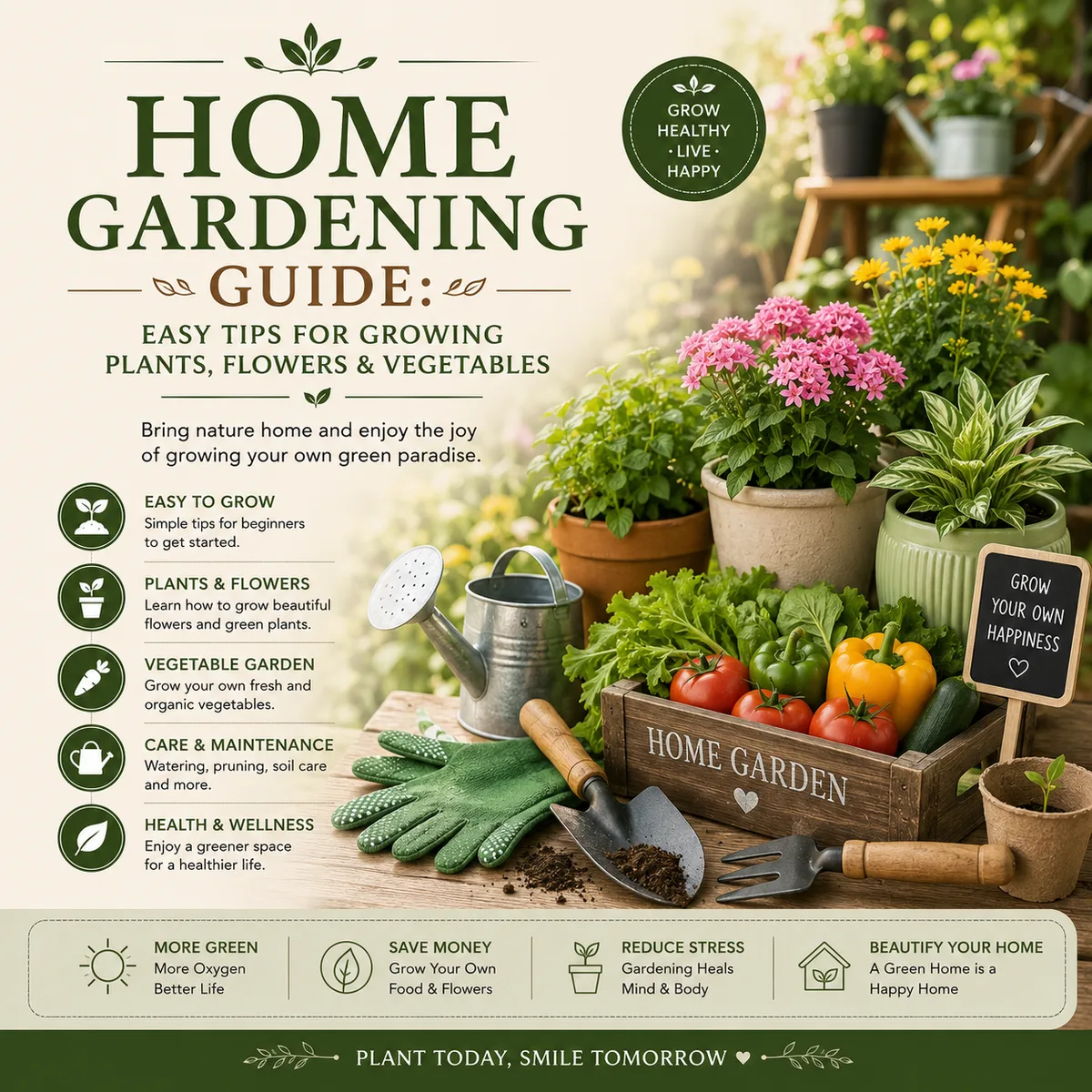
Home Gardening Guide: Tips for Growing a Healthy & Beautiful Garden
Introduction
Home gardening is a rewarding hobby that brings nature closer to your home while providing fresh vegetables, aromatic herbs, colorful flowers, and cleaner air. Whether you have a spacious backyard, a balcony, or just a few pots on a windowsill, you can create a thriving garden with the right planning and care.
In this guide, you'll learn how to start a home garden, choose the best plants, care for them naturally, and maintain a healthy green space throughout the year.
Benefits of Home Gardening
Growing your own plants offers many advantages beyond enhancing the beauty of your home.
Key Benefits
- Provides fresh and chemical-free vegetables and herbs
- Improves air quality around your home
- Reduces stress and promotes mental well-being
- Encourages sustainable living
- Saves money on fresh produce
- Supports birds, butterflies, and pollinators
Choosing the Right Location
Plants thrive when they receive the proper amount of sunlight and airflow.
Consider These Factors
- At least 4–6 hours of sunlight daily
- Good air circulation
- Easy access to water
- Proper drainage
- Protection from strong winds
Essential Gardening Tools
Having the right tools makes gardening easier and more enjoyable.
Basic Tools Include:
- Hand trowel
- Gardening gloves
- Watering can
- Pruning shears
- Garden fork
- Spray bottle
- Plant pots and containers
Best Plants for Beginners
If you're new to gardening, start with low-maintenance plants.
Vegetables
- Tomato
- Spinach
- Coriander
- Mint
- Green chilies
- Lettuce
Herbs
- Basil
- Mint
- Curry leaves
- Parsley
- Rosemary
Flowers
- Marigold
- Rose
- Hibiscus
- Petunia
- Sunflower
Choosing the Right Soil
Healthy soil is the foundation of a successful garden.
A good potting mix should include:
- Garden soil
- Compost
- Coco peat
- Sand for drainage
- Organic manure
Rich, well-drained soil helps plants absorb nutrients effectively.
Watering Tips
Proper watering keeps plants healthy without causing root damage.
Best Practices
- Water early in the morning or late evening.
- Avoid overwatering.
- Check soil moisture before watering.
- Water deeply rather than frequently.
- Use mulch to retain moisture.
Natural Fertilizers
Organic fertilizers improve soil health while protecting the environment.
Popular options include:
- Compost
- Vermicompost
- Cow manure
- Neem cake
- Banana peel fertilizer
- Eggshell powder
- Homemade compost
Natural Pest Control
Protect plants without relying heavily on chemicals.
Eco-Friendly Methods
- Neem oil spray
- Garlic and chili spray
- Soap solution for soft-bodied insects
- Remove infected leaves promptly
- Encourage beneficial insects like ladybugs
Seasonal Gardening Tips
Spring
- Sow flowering plants.
- Start vegetable seedlings.
Summer
- Water plants regularly.
- Provide shade for delicate plants.
Monsoon
- Improve drainage.
- Watch for fungal diseases.
Winter
- Grow leafy vegetables.
- Protect sensitive plants from frost.
Indoor Gardening Tips
You don't need a backyard to enjoy gardening.
Suitable indoor plants include:
- Snake Plant
- Money Plant
- Peace Lily
- Spider Plant
- Aloe Vera
- ZZ Plant
These plants are easy to maintain and help improve indoor air quality.
Composting at Home
Kitchen waste can become nutrient-rich compost for your garden.
Compost materials include:
- Vegetable peels
- Fruit scraps
- Dry leaves
- Coffee grounds
- Tea leaves
- Eggshells
Avoid adding meat, dairy products, and oily food scraps.
Common Gardening Mistakes
Avoid these common errors:
- Overwatering plants
- Using poor-quality soil
- Planting without enough sunlight
- Ignoring pest problems
- Overcrowding plants
- Applying excessive fertilizer
Home Gardening Maintenance Checklist
- Water plants as needed
- Remove weeds regularly
- Prune dead leaves and branches
- Add compost every few weeks
- Inspect for pests and diseases
- Clean pots and gardening tools
Conclusion
Home gardening is an enjoyable and fulfilling activity that benefits both your health and the environment. With proper planning, quality soil, regular watering, organic fertilizers, and a little patience, anyone can grow beautiful flowers, fresh herbs, and healthy vegetables at home. Start small, learn from experience, and watch your garden flourish season after season.
Frequently Asked Questions (FAQ)
Which plants are easiest for beginners?
Mint, coriander, basil, spinach, marigold, aloe vera, and money plant are excellent choices for beginners.
How often should I water my plants?
It depends on the plant type, weather, and soil. Check the soil moisture before watering.
What is the best fertilizer for home gardening?
Organic compost, vermicompost, neem cake, and well-rotted cow manure are excellent natural fertilizers.
Can I grow vegetables in pots?
Yes. Tomatoes, chilies, spinach, coriander, lettuce, and herbs grow well in containers with proper care.
How can I protect plants from pests naturally?
Use neem oil, homemade garlic spray, soap solution, and maintain good garden hygiene to reduce pest problems.
Excerpt
Learn how to create a thriving home garden with expert tips on choosing plants, preparing soil, watering, composting, natural pest control, and growing healthy vegetables, herbs, flowers, and indoor plants.
SEO Title
Home Gardening Guide: Tips for Growing Healthy Plants & Vegetables
Meta Description
Discover expert home gardening tips, plant care guides, organic gardening methods, composting, and easy ways to grow healthy vegetables, herbs, flowers, and indoor plants.