the complete guide to healthy iving
Learn practical tips for healthy living, including balanced nutrition, exercise, hydration, quality sleep, and stress management. Discover simple daily habits that can help you build a healthier and more balanced lifestyle.
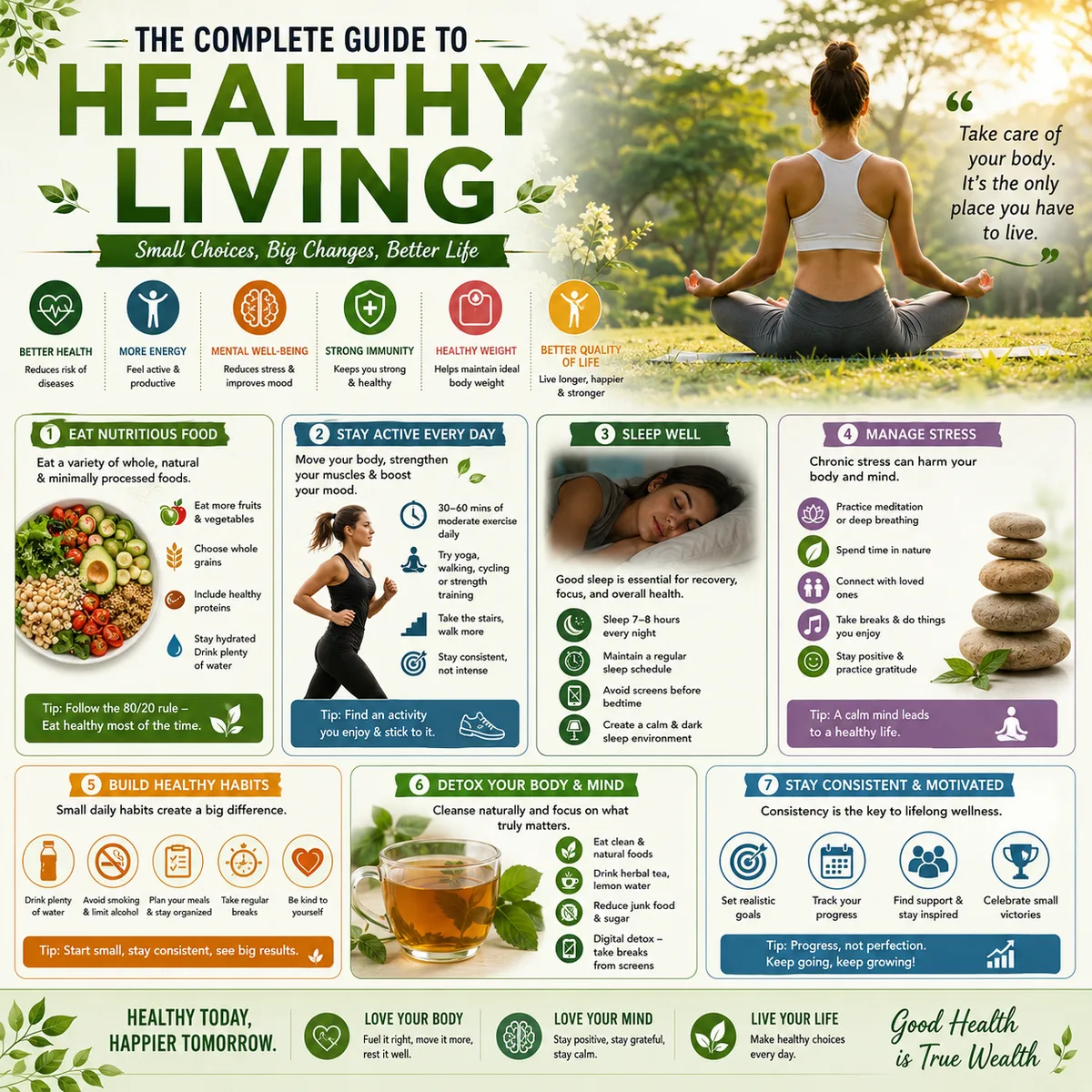
The Complete Guide to Healthy Living: Simple Habits for a Healthier Life
Living a healthy life doesn't require expensive diets, complicated workout plans, or dramatic lifestyle changes. Healthy living is about making consistent choices that support your physical, mental, and emotional well-being every day.
From eating nutritious foods and staying active to getting enough sleep and managing stress, small daily habits can make a significant difference over time. The goal isn't perfection—it's progress.
In this guide, we'll explore the key pillars of healthy living and share practical tips that you can start using today.
What Is Healthy Living?
Healthy living is a balanced lifestyle that promotes overall wellness. It focuses on nourishing your body with nutritious food, staying physically active, maintaining mental well-being, and adopting habits that improve your quality of life.
A healthy lifestyle includes:
- Eating a balanced diet
- Staying physically active
- Drinking enough water
- Getting quality sleep
- Managing stress effectively
- Maintaining a positive mindset
- Avoiding harmful habits like smoking and excessive alcohol consumption
Healthy living isn't about following trends—it's about creating sustainable habits that work for you.
Why Is Healthy Living Important?
Your daily habits directly affect your long-term health. A healthy lifestyle can help:
- Improve energy levels
- Support a stronger immune system
- Maintain a healthy weight
- Reduce the risk of heart disease and diabetes
- Improve digestion
- Strengthen bones and muscles
- Enhance mental health and mood
- Increase productivity and focus
The earlier you start building healthy habits, the greater the benefits you'll enjoy in the future.
Eat a Balanced Diet
A nutritious diet provides your body with the essential vitamins, minerals, proteins, healthy fats, and carbohydrates needed for daily activities.
Include More Fruits and Vegetables
Fresh fruits and vegetables are rich in antioxidants, fiber, and essential nutrients. Aim to include a variety of colorful produce in your meals every day.
Choose Whole Grains
Replace refined grains with whole grains like oats, brown rice, millet, and whole wheat to support digestion and maintain steady energy levels.
Eat Quality Protein
Protein is important for muscle repair and overall health. Good sources include:
- Lentils
- Chickpeas
- Beans
- Paneer
- Eggs
- Fish
- Lean chicken
- Dry fruits and seeds
Include Healthy Fats
Healthy fats support brain function and heart health. Add foods like almonds, walnuts, flaxseeds, chia seeds, and healthy cooking oils to your diet in moderation.
Stay Hydrated
Water is essential for nearly every function in your body. Proper hydration helps regulate body temperature, improve digestion, support healthy skin, and maintain energy levels.
Simple hydration tips:
- Start your day with a glass of water.
- Carry a reusable water bottle.
- Drink water throughout the day instead of waiting until you're thirsty.
- Eat water-rich fruits like watermelon, oranges, and cucumbers.
Exercise Regularly
Regular physical activity keeps your body strong and your mind healthy.
Benefits of exercise include:
- Better heart health
- Improved flexibility
- Stronger muscles and bones
- Weight management
- Better sleep
- Reduced stress
- Improved mood
Aim for at least 150 minutes of moderate physical activity each week. Walking, cycling, yoga, swimming, dancing, and strength training are all excellent choices.
Prioritize Quality Sleep
Sleep is when your body repairs itself. Poor sleep can affect concentration, immunity, mood, and overall health.
Most adults should aim for 7–9 hours of quality sleep every night.
Healthy sleep habits include:
- Maintaining a consistent bedtime
- Limiting screen time before bed
- Keeping your bedroom cool and quiet
- Avoiding heavy meals late at night
- Reducing caffeine intake in the evening
Manage Stress Effectively
Stress is a normal part of life, but chronic stress can negatively impact your health.
Healthy ways to manage stress include:
- Deep breathing exercises
- Meditation
- Yoga
- Spending time outdoors
- Reading
- Listening to music
- Talking with family and friends
- Practicing gratitude
Taking even a few minutes each day to relax can improve both mental and physical well-being.
Build Healthy Daily Habits
Success comes from consistency rather than perfection.
Simple habits to follow:
- Eat breakfast every day.
- Include vegetables in every meal.
- Avoid excessive sugary drinks.
- Limit processed foods.
- Take short walking breaks during work.
- Practice portion control.
- Prepare meals at home whenever possible.
- Stay physically active throughout the day.
Small improvements repeated daily can lead to lasting results.
Foods That Support a Healthy Lifestyle
A balanced diet includes a variety of nutrient-rich foods.
| FoodKey Benefits | |
| Almonds | Healthy fats, protein, vitamin E |
| Walnuts | Omega-3 fatty acids |
| Raisins | Iron, fiber, antioxidants |
| Turmeric | Contains curcumin with antioxidant properties |
| Oats | Rich in fiber and supports heart health |
| Green leafy vegetables | Vitamins, minerals, and fiber |
| Lentils | Plant-based protein |
| Seasonal fruits | Natural vitamins and hydration |
Remember that no single food provides everything your body needs. Variety is the key to good nutrition.
Common Mistakes to Avoid
Many people unknowingly develop habits that affect their health.
Avoid these common mistakes:
- Skipping breakfast
- Drinking too little water
- Eating excessive processed foods
- Sitting for long periods without movement
- Sleeping less than seven hours regularly
- Following extreme diet plans
- Ignoring stress and mental health
- Consuming too much added sugar
Replacing unhealthy habits with healthier alternatives gradually is more effective than making drastic changes overnight.
Frequently Asked Questions
What is the first step toward healthy living?
Start with one small habit, such as drinking more water, walking for 20–30 minutes a day, or adding an extra serving of vegetables to your meals. Consistency matters more than perfection.
How much water should I drink daily?
Hydration needs vary from person to person depending on age, activity level, climate, and health. Many adults benefit from drinking around 2–3 liters of fluids per day, but individual needs can differ.
How much exercise do adults need?
Most adults should aim for at least 150 minutes of moderate-intensity physical activity each week, along with muscle-strengthening activities on two or more days.
Are dry fruits healthy?
Yes. Dry fruits such as almonds, walnuts, raisins, and cashews provide healthy fats, fiber, vitamins, and minerals when consumed in appropriate portions.
Can healthy living help improve mental well-being?
A balanced diet, regular exercise, sufficient sleep, and stress management can all contribute to improved mood, better focus, and overall mental well-being.
Conclusion
Healthy living is not about following strict rules—it's about making better choices every day. Eating nutritious foods, staying active, drinking enough water, getting quality sleep, and managing stress are simple yet powerful habits that support long-term health.
Remember that meaningful change happens gradually. Start with one healthy habit today, stay consistent, and build on your progress over time. Every positive step you take brings you closer to a healthier, happier, and more balanced life.
Explore more wellness tips, nutritious recipes, and quality products on the Vrindavan Rasa Blog as you continue your journey toward better health.