The Story Behind Mathura Peda: History, Taste & Tradition
Explore the fascinating story of Mathura Peda, a beloved sweet of Braj. Discover its traditional ingredients, unique texture, rich dairy heritage, cultural significance, and why it remains a favorite during festivals, temple visits, and celebrations.
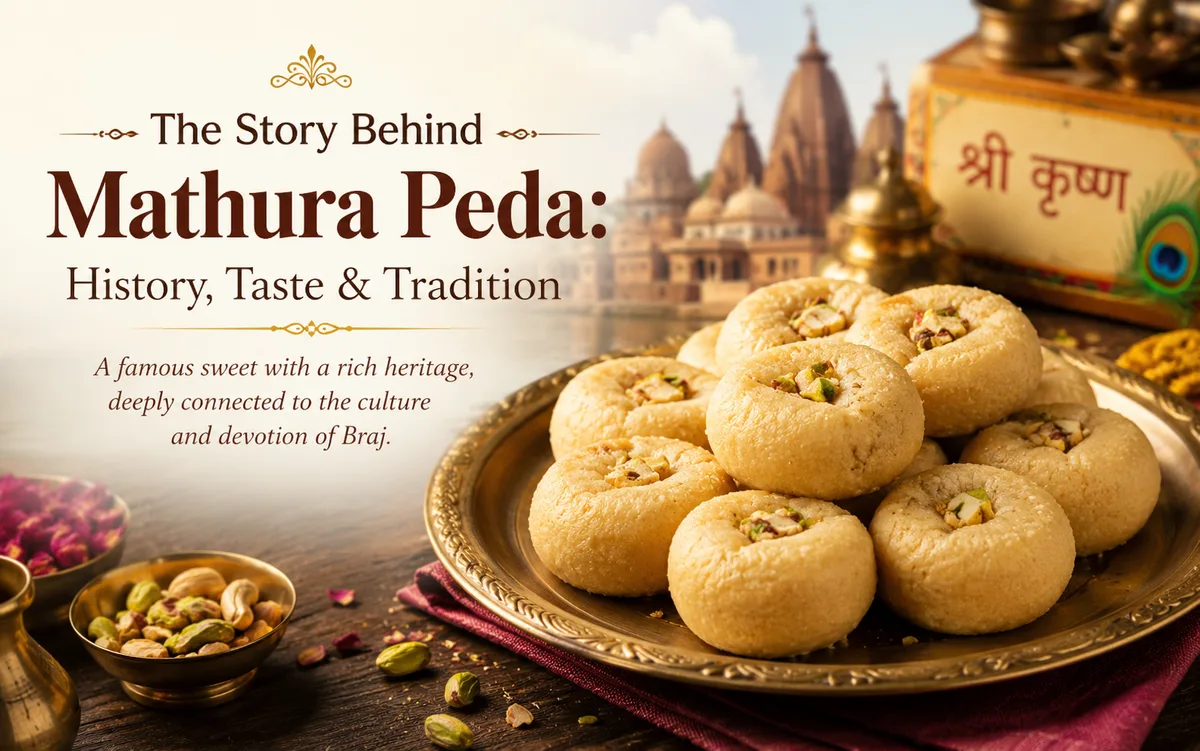
The Story Behind Mathura Peda: History, Taste & Tradition
Mathura is known around the world as the sacred birthplace of Lord Krishna, but the city is also famous for something that has become an inseparable part of its food culture — Mathura Peda.
Soft, rich, mildly grainy and deeply aromatic, Mathura Peda is more than just a sweet. It represents the traditional flavors of Braj and has become a popular choice for prasadam, festivals, celebrations and gifts.
But how did this simple milk-based sweet become so closely associated with Mathura?
What Is Mathura Peda?
Mathura Peda is a traditional Indian sweet primarily prepared using khoya (mawa), sugar and aromatic ingredients such as cardamom. Unlike many modern sweets, authentic peda has a relatively simple ingredient list.
The distinctive character of Mathura Peda comes from slowly cooking the khoya until it develops a deeper color, rich aroma and slightly caramelized flavor. Sugar is then incorporated to create the characteristic texture and sweetness.
A good peda is generally:
- Soft but slightly grainy
- Rich and milky
- Moderately sweet
- Aromatic
- Golden to light brown in color
- Easy to break apart while eating
The Connection Between Mathura and Peda
Mathura has been an important center of Krishna devotion and Braj culture for centuries. Milk, curd, butter, ghee and other dairy products have traditionally been an important part of the food culture of the Braj region.
This strong dairy tradition created the perfect environment for milk-based sweets to become part of local cuisine.
Peda gradually became associated with Mathura's sweet-making tradition and eventually earned its distinctive identity as Mathura Peda.
Today, for many visitors, a trip to Mathura or Vrindavan feels incomplete without tasting or taking home a box of peda.
Why Does Mathura Peda Taste Different?
The secret isn't necessarily a complicated recipe. Much of its character comes from the cooking technique and quality of ingredients.
Traditional preparation involves slowly cooking khoya over controlled heat. This allows moisture to evaporate while the milk solids develop a richer aroma and deeper flavor.
The texture also matters.
Unlike extremely smooth sweets, traditional Mathura Peda often has a slightly grainy and crumbly texture, which is one of its defining characteristics.
The key factors include:
1. Quality of Khoya
Fresh, good-quality khoya forms the foundation of the sweet.
2. Slow Cooking
Cooking the khoya gradually helps develop its characteristic flavor and color.
3. Balanced Sugar
Too much sugar can overpower the natural richness of milk. Traditional peda aims for a balance between sweetness and dairy flavor.
4. Aroma
Cardamom and other traditional flavoring ingredients can add a subtle fragrance without overwhelming the main taste.
Mathura Peda and Braj Tradition
Food in Braj is closely connected with religious traditions and festivals.
Mathura and nearby Vrindavan attract devotees throughout the year, particularly during occasions associated with Janmashtami, Holi and other Krishna celebrations.
Milk-based foods also have a special cultural association with Braj. Stories and traditions surrounding Krishna frequently mention milk, butter, curd and other dairy foods, making dairy-based sweets a natural part of the region's culinary identity.
For many families and visitors, peda is therefore not simply a dessert — it is also associated with devotion, celebration and sharing.
Peda as Prasadam
One of the reasons Mathura Peda has become so popular is its connection with religious visits.
Devotees visiting temples and sacred places in Mathura and Vrindavan often purchase traditional sweets as prasadam or offerings and take them home for family and friends.
This has helped transform peda from a local sweet into a recognizable symbol of the Braj region.
When Is Mathura Peda Traditionally Enjoyed?
There is no particular season required to enjoy peda. It is commonly associated with:
- 🛕 Temple visits and prasadam
- 🎉 Festivals
- 👨👩👧👦 Family celebrations
- 🎁 Religious and traditional gifting
- 💐 Weddings and special occasions
- 🏠 Welcoming guests
- ☕ Everyday enjoyment with tea or milk
During festivals and religious occasions, traditional sweets become especially meaningful because they are often shared with family, friends and the wider community.
How to Enjoy Mathura Peda
Mathura Peda can be enjoyed on its own, but there are several simple ways to make the experience even better.
Try serving it:
- With a cup of hot chai
- Alongside warm milk
- As part of a traditional Indian sweets platter
- After a festive meal
- As a small gift for family and friends
For the most traditional experience, enjoy it at room temperature so the aroma and texture of the peda can be appreciated properly.
How to Store Peda
Because peda is made primarily from dairy ingredients, proper storage is important.
If you purchase peda, follow the storage instructions provided by the sweet maker or manufacturer. Depending on the preparation and packaging, refrigeration may be recommended.
Always check:
- Manufacturing date
- Best-before date
- Storage instructions
- Packaging condition
Avoid keeping dairy-based sweets exposed to heat for extended periods, particularly in India's warmer climate.
What Makes Authentic Mathura Peda Special?
The popularity of Mathura Peda isn't just about sweetness. Its appeal comes from a combination of simple ingredients, traditional preparation and cultural heritage.
It connects several elements of Braj life:
Milk → Traditional Cooking → Temple Culture → Festivals → Family & Community
That is what makes the peda more than an ordinary Indian sweet.
Mathura Peda: A Taste of Braj
Food has a unique ability to preserve history and culture. Mathura Peda is a perfect example.
Its rich milk flavor, distinctive texture and connection with the traditions of Braj have made it one of India's most recognizable regional sweets.
Whether you discover it during a visit to Mathura, receive it as prasadam, or share it with your family during a festival, every peda carries a small taste of the region's culinary heritage.
Mathura Peda isn't just a sweet from Mathura — it is a delicious part of the story of Braj.
Discover the Taste of Tradition
At Vrindavan Rasa, we believe traditional Indian foods deserve to be celebrated and shared with the next generation. From traditional sweets and dry fruits to spices and everyday Indian essentials, our goal is to bring the authentic flavors and traditions of India closer to your home.