The Ultimate Guide to Grains & Pulses: Benefits, Types, Nutrition & Healthy Eating
Discover the nutritional benefits of grains and pulses, explore their types, cooking methods, storage tips, and healthy recipes. Learn how rice, wheat, lentils, beans, and millets can be part of a balanced diet with Vrindavan Rasa.
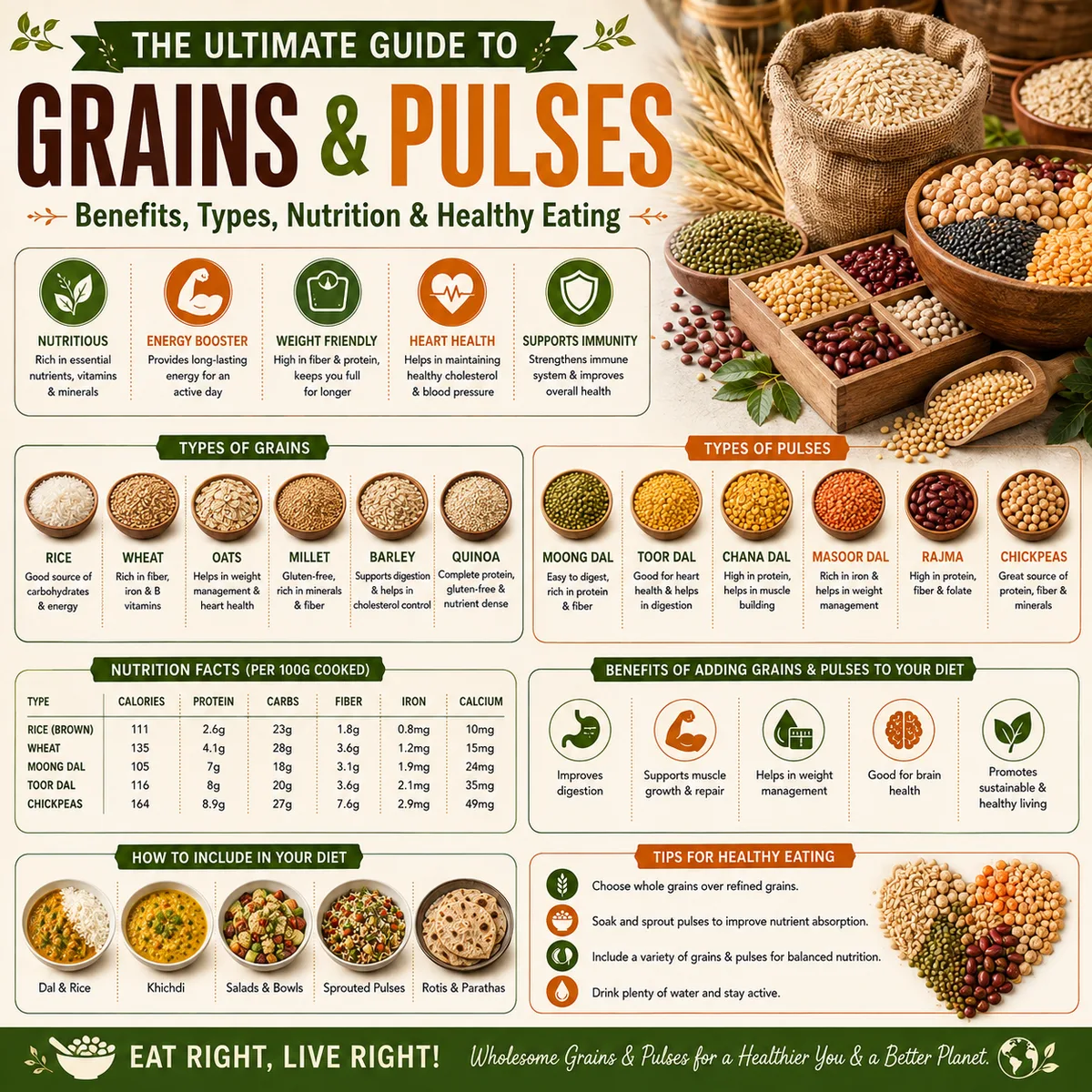
The Ultimate Guide to Grains & Pulses: Benefits, Types, Nutrition & Healthy Eating
Grains and pulses are the foundation of a balanced diet and have been an essential part of Indian meals for centuries. They are packed with carbohydrates, protein, dietary fiber, vitamins, and minerals that provide energy and support overall well-being. From rice and wheat to lentils and beans, these pantry staples are versatile, nutritious, and suitable for everyday cooking.
Whether you're preparing a wholesome family meal or planning a healthy diet, understanding different grains and pulses can help you make better food choices.
What Are Grains and Pulses?
Grains are edible seeds of cereal plants such as rice, wheat, oats, maize, barley, and millets. They are a major source of carbohydrates and energy.
Pulses are edible dried seeds of legume plants, including lentils, chickpeas, peas, and beans. They are an excellent source of plant-based protein and dietary fiber.
Popular Grains
Rice
Rice is one of the most widely consumed staple foods around the world.
Common Types
- Basmati Rice
- Brown Rice
- White Rice
- Sona Masoori Rice
Uses
- Biryani
- Pulao
- Steamed Rice
- Fried Rice
Wheat
Wheat is commonly used to prepare flour for chapatis, bread, pasta, and bakery products.
Uses
- Chapati
- Paratha
- Bread
- Pasta
Oats
Oats are a nutritious whole grain enjoyed as a healthy breakfast or snack.
Uses
- Porridge
- Smoothies
- Overnight Oats
- Cookies
Millets
Millets are traditional grains known for their versatility and nutritional value.
Popular Types
- Ragi
- Bajra
- Jowar
- Foxtail Millet
Popular Pulses
Toor Dal (Pigeon Pea)
A staple pulse used in everyday Indian cooking.
Uses
- Dal
- Sambar
- Khichdi
Moong Dal
A light and versatile pulse suitable for many recipes.
Uses
- Dal
- Sprouts
- Khichdi
- Soup
Masoor Dal
Known for its quick cooking time and rich flavor.
Uses
- Dal
- Curry
- Soup
Chana Dal
A popular pulse with a nutty taste.
Uses
- Dal
- Snacks
- Sweets
- Curry
Chickpeas (Kabuli Chana)
Chickpeas are widely used in Indian and international cuisines.
Uses
- Chole
- Salads
- Hummus
- Curries
Kidney Beans (Rajma)
Rajma is a favorite ingredient in North Indian cuisine.
Uses
- Rajma Curry
- Rice
- Salads
Nutritional Benefits
Grains and pulses are naturally rich in:
- Complex carbohydrates
- Plant-based protein
- Dietary fiber
- Iron
- Magnesium
- Potassium
- B Vitamins
- Essential minerals
Including a variety of grains and pulses in your diet helps create balanced meals.
Health Benefits
1. Provides Long-Lasting Energy
Whole grains supply complex carbohydrates that release energy gradually throughout the day.
2. Supports Digestive Health
Many grains and pulses contain dietary fiber, which supports healthy digestion.
3. Excellent Source of Plant Protein
Pulses provide protein that complements a balanced vegetarian diet.
4. Helps You Feel Full
Fiber and protein can increase satiety, helping you stay satisfied for longer.
5. Versatile for Everyday Cooking
Grains and pulses can be used in breakfast, lunch, dinner, snacks, and festive dishes.
How to Store Grains & Pulses
To maintain freshness:
- Store in airtight containers.
- Keep in a cool, dry place.
- Protect from moisture.
- Keep away from direct sunlight.
- Check regularly for freshness.
Tips for Buying Quality Grains & Pulses
Choose products that:
- Are clean and free from impurities.
- Have a natural color and appearance.
- Come in sealed packaging.
- Display manufacturing and expiry dates.
- Are sourced from trusted brands like Vrindavan Rasa.
Easy Ways to Include Them in Your Diet
- Prepare wholesome dals.
- Make khichdi.
- Cook pulao and rice dishes.
- Add beans to salads.
- Enjoy oatmeal for breakfast.
- Prepare millet rotis.
- Make soups with lentils.
Frequently Asked Questions
Are grains and pulses healthy?
Yes. They are nutrient-rich foods that provide carbohydrates, protein, fiber, vitamins, and minerals as part of a balanced diet.
Can I eat grains and pulses every day?
Yes, they can be included in daily meals as part of a varied and balanced diet.
Which pulse contains the most protein?
Many pulses, including lentils, chickpeas, kidney beans, and moong dal, are excellent sources of plant-based protein.
How should grains and pulses be stored?
Store them in airtight containers in a cool, dry place away from moisture and direct sunlight.
Why choose premium grains and pulses?
Premium-quality grains and pulses offer better freshness, consistent quality, and excellent taste for everyday cooking.
Conclusion
Grains and pulses are nutritious kitchen essentials that form the backbone of healthy meals. Whether you're cooking traditional Indian recipes or modern healthy dishes, these ingredients provide nourishment, versatility, and great taste. By choosing premium-quality grains and pulses from Vrindavan Rasa, you can enjoy wholesome meals prepared with trusted ingredients every day.