Traditional Indian Sweets: A Journey Through Timeless Flavors
Discover the rich heritage of Indian sweets and traditional foods, from the iconic Mathura Peda and Gulab Jamun to festive delicacies and regional specialties. Explore authentic flavors, timeless recipes, and the cultural traditions that make India's culinary legacy truly unique.
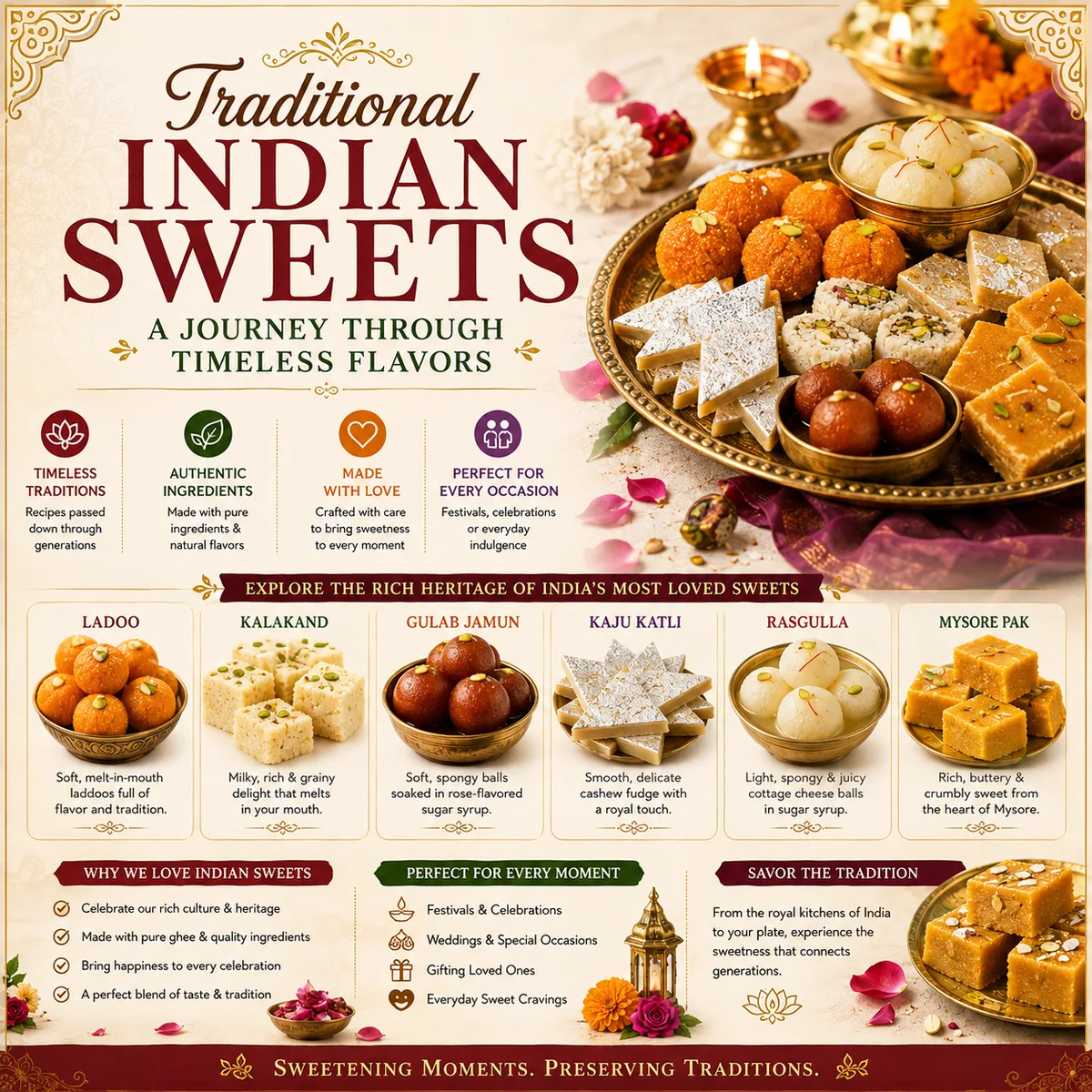
The Rich Tradition of Indian Sweets: A Journey Through Timeless Flavors
India is renowned for its diverse culture, vibrant festivals, and extraordinary cuisine. Among its many culinary treasures, traditional sweets hold a special place. From festive celebrations and religious offerings to family gatherings and everyday indulgence, Indian sweets have been an integral part of the country's heritage for centuries.
Every region of India offers its own unique flavors, ingredients, and recipes, making Indian sweets a delightful reflection of the nation's rich cultural diversity.
Why Traditional Sweets Are Special
Traditional Indian sweets are more than just desserts—they symbolize joy, hospitality, gratitude, and celebration. They are commonly prepared during festivals, weddings, birthdays, and religious ceremonies, bringing families and communities together.
Many recipes have been passed down through generations, preserving authentic flavors and traditional cooking techniques.
Popular Traditional Indian Sweets
Mathura Peda
One of India's most famous sweets, Mathura Peda is prepared using slow-cooked milk (khoya), sugar, and aromatic cardamom. Originating from the holy city of Mathura, it is widely offered during religious ceremonies and is loved for its rich, caramelized flavor.
Laddu
Laddus are among the most popular Indian sweets and come in many varieties, including Besan Laddu, Motichoor Laddu, Boondi Laddu, and Coconut Laddu. These delicious treats are commonly served during festivals and celebrations.
Gulab Jamun
Soft, golden dumplings made from khoya and soaked in fragrant sugar syrup make Gulab Jamun one of the most loved desserts across India.
Kaju Katli
Prepared with premium cashews and sugar, Kaju Katli is known for its smooth texture and elegant presentation. It is a popular gift during festivals and special occasions.
Jalebi
Jalebi is a crispy, spiral-shaped sweet made from fermented batter and dipped in sugar syrup. It is often enjoyed hot with milk or rabri.
Rasgulla
This soft and spongy dessert is made from fresh cottage cheese and sugar syrup, offering a light and refreshing taste.
The Importance of Traditional Ingredients
Authentic Indian sweets are prepared using carefully selected ingredients such as:
- Pure milk
- Khoya (mawa)
- Ghee
- Jaggery
- Sugar
- Cardamom
- Saffron
- Dry fruits
- Pistachios
- Almonds
Using quality ingredients enhances both taste and texture while preserving traditional authenticity.
Traditional Foods Beyond Sweets
India's culinary heritage also includes a variety of savory traditional foods enjoyed across different regions.
Some popular examples include:
- Puri and Aloo Sabzi
- Khichdi
- Dal Baati
- Poha
- Dhokla
- Idli and Dosa
- Chole Bhature
- Paratha
- Litti Chokha
- Pongal
Each dish reflects local ingredients, cooking traditions, and regional flavors.
Traditional Foods During Festivals
Food plays an essential role in Indian festivals.
Popular festive delicacies include:
- Gujiya during Holi
- Modak during Ganesh Chaturthi
- Kheer during festivals and celebrations
- Seviyan during Eid
- Til Ladoo during Makar Sankranti
- Peda and Makhan Mishri during Janmashtami
These special dishes make every celebration even more memorable.
Tips for Choosing Authentic Traditional Sweets
When purchasing traditional sweets, consider the following:
- Buy from trusted and reputed sellers.
- Check the freshness and packaging.
- Review ingredient information.
- Prefer products made with pure ghee and quality ingredients.
- Verify manufacturing and expiry dates.
- Store sweets according to the recommended instructions.
Freshly prepared sweets usually offer the best taste and texture.
Preserving India's Culinary Heritage
Traditional sweets and foods are an important part of India's cultural identity. By supporting authentic recipes and regional specialties, we help preserve generations of culinary craftsmanship while introducing these timeless flavors to future generations.
Whether enjoyed during festivals or shared with loved ones, traditional foods continue to bring happiness, togetherness, and unforgettable memories.
Final Thoughts
Indian sweets and traditional foods represent the country's rich history, culture, and hospitality. From the famous Mathura Peda and Kaju Katli to regional delicacies enjoyed across India, every recipe tells a story of tradition and celebration.
Exploring these authentic flavors is not only a delightful culinary experience but also a way to appreciate India's diverse food heritage. Whether you're celebrating a festival, gifting loved ones, or simply satisfying your sweet tooth, traditional Indian sweets remain a timeless choice.
Disclaimer: This article is intended for informational purposes only. Product availability, ingredients, and preparation methods may vary by region and manufacturer. Always review ingredient labels if you have food allergies or dietary restrictions.