Women's Health Guide: Nutrition, Fitness & Wellness Tips for Every Stage of Life
Discover essential women's health tips on nutrition, fitness, hormonal wellness, mental health, pregnancy, and preventive care to support a healthy, active, and balanced lifestyle at every stage of life.
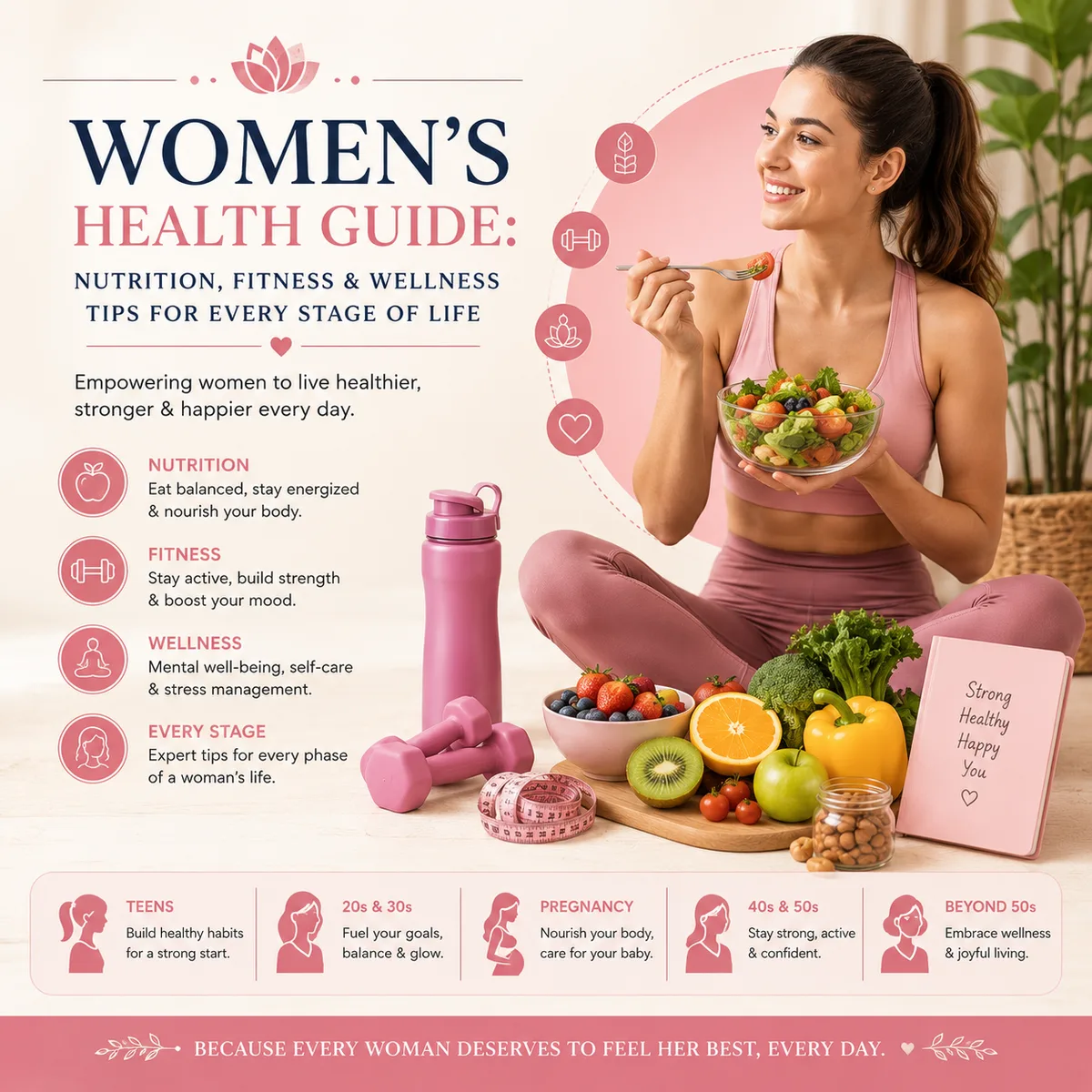
Women's Health Guide: Essential Tips for a Healthy & Balanced Life
Introduction
Women's health is a lifelong journey that evolves through different stages, from adolescence and adulthood to pregnancy, motherhood, and menopause. Maintaining good physical, mental, and emotional health is essential for leading a happy and active life.
This guide covers healthy eating, exercise, hormonal health, mental well-being, preventive care, and lifestyle habits that can help women stay healthy at every age.
Why Women's Health Matters
Women experience unique health needs due to hormonal changes, reproductive health, pregnancy, and aging. Prioritizing wellness helps reduce the risk of chronic diseases and improves overall quality of life.
Benefits of a Healthy Lifestyle
- Supports hormonal balance
- Strengthens bones and muscles
- Boosts immunity
- Improves heart health
- Increases energy levels
- Enhances mental well-being
- Promotes healthy aging
Nutrition for Women's Health
A balanced diet provides the nutrients needed to support overall health.
Essential Nutrients
Iron
Helps prevent iron deficiency and supports healthy blood production.
Food Sources
- Spinach
- Lentils
- Beans
- Lean meats
- Pumpkin seeds
Calcium
Important for strong bones and teeth.
Food Sources
- Milk
- Yogurt
- Paneer
- Cheese
- Sesame seeds
Protein
Supports muscle growth, tissue repair, and overall health.
Good Sources
- Eggs
- Pulses
- Fish
- Chicken
- Tofu
- Dairy products
Healthy Fats
Support brain function and hormone production.
Choose:
- Nuts
- Seeds
- Avocados
- Olive oil
- Fatty fish
Fruits & Vegetables
Eat a colorful variety daily for vitamins, minerals, antioxidants, and fiber.
Staying Active
Regular physical activity improves both physical and mental health.
Recommended Activities
- Walking
- Yoga
- Cycling
- Strength training
- Swimming
- Stretching exercises
Aim for at least 150 minutes of moderate exercise each week, unless advised otherwise by your healthcare provider.
Mental Health & Emotional Well-Being
Mental wellness is just as important as physical health.
Healthy Habits
- Practice mindfulness or meditation.
- Get enough sleep.
- Spend time with family and friends.
- Manage stress through hobbies.
- Seek professional support when needed.
Hormonal Health
Hormonal changes occur naturally throughout life.
Common stages include:
- Puberty
- Menstrual years
- Pregnancy
- Perimenopause
- Menopause
Eating a balanced diet, staying active, and attending regular health check-ups can support overall well-being during these stages.
Pregnancy & Maternal Health
During pregnancy, proper nutrition and regular prenatal care are essential.
Healthy habits include:
- Eating nutrient-rich foods
- Staying hydrated
- Taking prenatal supplements only as prescribed
- Following your healthcare provider's guidance
- Getting adequate rest
Bone Health
Women are at higher risk of osteoporosis as they age.
Support bone health by:
- Consuming calcium-rich foods
- Getting enough vitamin D
- Performing weight-bearing exercises
- Avoiding smoking and excessive alcohol consumption
Heart Health
Heart disease affects women too.
Protect your heart by:
- Eating a balanced diet
- Exercising regularly
- Managing stress
- Maintaining a healthy weight
- Monitoring blood pressure and cholesterol
Preventive Health Check-Ups
Regular screenings help detect health issues early.
Discuss appropriate screenings with your healthcare provider, which may include:
- Blood pressure checks
- Blood sugar testing
- Cholesterol screening
- Breast health examinations
- Cervical health screening
- Bone density testing (when recommended)
Healthy Lifestyle Tips
- Drink plenty of water.
- Eat whole, minimally processed foods.
- Sleep 7–9 hours each night.
- Avoid tobacco products.
- Limit sugary drinks and processed foods.
- Maintain a healthy body weight.
- Schedule regular medical check-ups.
Common Health Concerns
Women may experience various health conditions throughout life, including:
- Iron deficiency
- PCOS
- Thyroid disorders
- Osteoporosis
- Menopause-related symptoms
- Anxiety and depression
If you experience persistent symptoms or concerns, consult a qualified healthcare professional for evaluation and treatment.
Conclusion
Taking care of your health is one of the most valuable investments you can make. A balanced diet, regular exercise, quality sleep, stress management, and preventive healthcare can help women enjoy a healthier and more active life. Small, consistent lifestyle choices can make a lasting difference at every stage of life.
Frequently Asked Questions (FAQ)
What foods are important for women's health?
A balanced diet including fruits, vegetables, whole grains, lean proteins, dairy or calcium-rich alternatives, healthy fats, and iron-rich foods supports overall health.
How much exercise should women get?
Many adults benefit from at least 150 minutes of moderate-intensity exercise per week, along with muscle-strengthening activities.
Why is calcium important for women?
Calcium supports healthy bones and helps reduce the risk of osteoporosis as women age.
How can women improve hormonal health?
Maintaining a healthy lifestyle, managing stress, sleeping well, and following medical advice can help support hormonal health.
When should women get regular health screenings?
Screening schedules vary based on age, family history, and individual risk factors. Consult your healthcare provider for personalized recommendations.